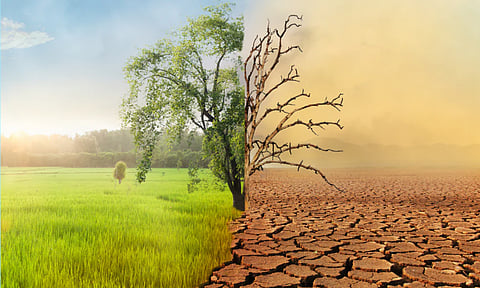

Hyderabad: Indian cities are increasingly facing two very different climate threats: extreme heat during summer and intense rainfall and flooding during the monsoon.
But treating these as separate problems may leave cities vulnerable, as many of the same urban features that worsen heat can also increase flood risk.
Preparing for heat and rain
A 2025 World Bank report, Towards Resilient and Prosperous Cities in India, calls for Indian cities to strengthen resilience to urban flooding and extreme heat together, alongside low-carbon urban development.
The report notes that India’s urban population is expected to nearly double from 480 million in 2020 to 951 million by 2050, making decisions about today’s infrastructure particularly important.
Why heat and floods are connected
At first, heatwaves and floods may appear to be unrelated problems. One is caused by high temperatures, the other by too much water.
But the way cities grow can make both worse.
Large expanses of concrete, asphalt and buildings absorb and retain heat, contributing to the urban heat island effect. At the same time, these hard surfaces prevent rainwater from soaking into the ground.
During intense rainfall, more water becomes surface runoff, putting pressure on stormwater drains and increasing the risk of waterlogging.
This means the same loss of open, green and permeable spaces can contribute to both hotter neighbourhoods and faster runoff.
A hotter city is not necessarily a flood-resilient city
Urban planning often deals with heat and flooding through separate interventions: heat action plans for summer and drainage projects for the monsoon.
But the World Bank argues for a more integrated approach to urban resilience. Its report recommends city-level climate action plans that account for local climate and disaster risks while guiding infrastructure investment and urban development.
For example, urban trees and green spaces can provide shade and reduce local temperatures. At the same time, vegetation and open spaces can help absorb rainfall and slow surface runoff.
Wetlands and urban water bodies can similarly serve more than one purpose: they can provide cooling and help manage excess rainwater.
Why Hyderabad’s urban growth matters
For rapidly expanding cities such as Hyderabad, the issue is particularly relevant.
As built-up areas expand, natural surfaces are replaced by roads, buildings and parking areas. Rain that once had more opportunities to infiltrate the soil can instead flow rapidly across paved surfaces.
During an intense rainfall spell, this can contribute to waterlogging. During a heatwave, the same built-up environment can retain heat and offer fewer shaded spaces.
The challenge, therefore, is not simply to build more drains or plant more trees independently. It is to consider how land-use decisions affect multiple climate risks simultaneously.
Can one solution tackle both problems?
In some cases, yes.
The World Bank highlights ideas such as green spaces, improved stormwater management and cool roofs as part of a broader urban resilience strategy. It also points to cities already taking steps to address individual climate risks. For example, Ahmedabad’s heat action planning and Kolkata’s flood forecasting system.
Nature-based solutions can also provide multiple benefits. The World Bank notes that urban forests, wetlands and multifunctional parks can help manage flooding while reducing urban heat.

